

Social platforms rent you an audience; an email list is the one channel a musician actually owns. When a tour date drops, a pre-save link goes live or a vinyl run is about to sell out, email reaches the people who asked to hear from you, with no algorithm in between. The hard part is picking a tool that fits how musicians work: irregular campaigns, tight budgets, small teams, and income that arrives in bursts.
This guide compares the best email marketing for musicians on monthly US prices at the fan-list sizes working musicians have: 500, 2,500 and 5,000 fans. We opened accounts on four of the five tools ourselves in November 2026 (MailerLite, Kit, Brevo and Mailchimp). beehiiv is not available in our region, so its section relies on beehiiv’s own plan pages.
Disclosure: This article may contain affiliate links. If you buy through them, we may earn a commission at no extra cost to you. It never affects our verdicts. Learn more. Details we could not confirm on a vendor’s own page or in our own account are marked with a dagger (†).
TL;DR
- Best free start for most musicians: Kit. Free up to 10,000 fans, built for creators, and it can sell digital downloads (about 3.5% + $0.30 per sale). The free plan has no sequences or automations (checked in our account on November 20, 2026).
- Best budget automation: MailerLite. Welcome sequences, gig segments and landing pages from $12/month at 500 fans.
- Best for a big list you email a few times a year: Brevo. You pay for emails sent: $25/month for 2,500 fans and $32 for 5,000 with a monthly email.
- Best if your newsletter is a brand: beehiiv. Free up to 2,500 fans, with growth and sponsorship tools.
- Skip Mailchimp unless a tool you already use only connects to it.
Kit Black Friday deal (until December 1, 2026, 11:59 PM PT): 60% off the Kit Creator plan for your first three months when you sign up through our link, according to Kit’s affiliate team. The free plan (up to 10,000 subscribers) is unchanged. See the Kit offer →
We earn a commission if you upgrade through this link. Check the final price on Kit’s checkout page.
In this guide
What musicians actually need from email software
A musician’s email setup is short:
- A sign-up form at shows, on your site and in your link-in-bio, with a reason to join. A free track or an early demo works better than “join the newsletter”.
- A welcome sequence: two or three automatic emails that deliver the freebie and tell your story.
- Gig announcements by city or region, so a Chicago show email does not land on your Lisbon fans.
- Launch emails for pre-saves, crowdfunding and merch drops: the emails that bring in the most money.
- A low fixed cost. Music income is seasonal; your software bill should not be.
Every tool below can do this. They differ on free-plan limits, automation and what they charge as the list grows.
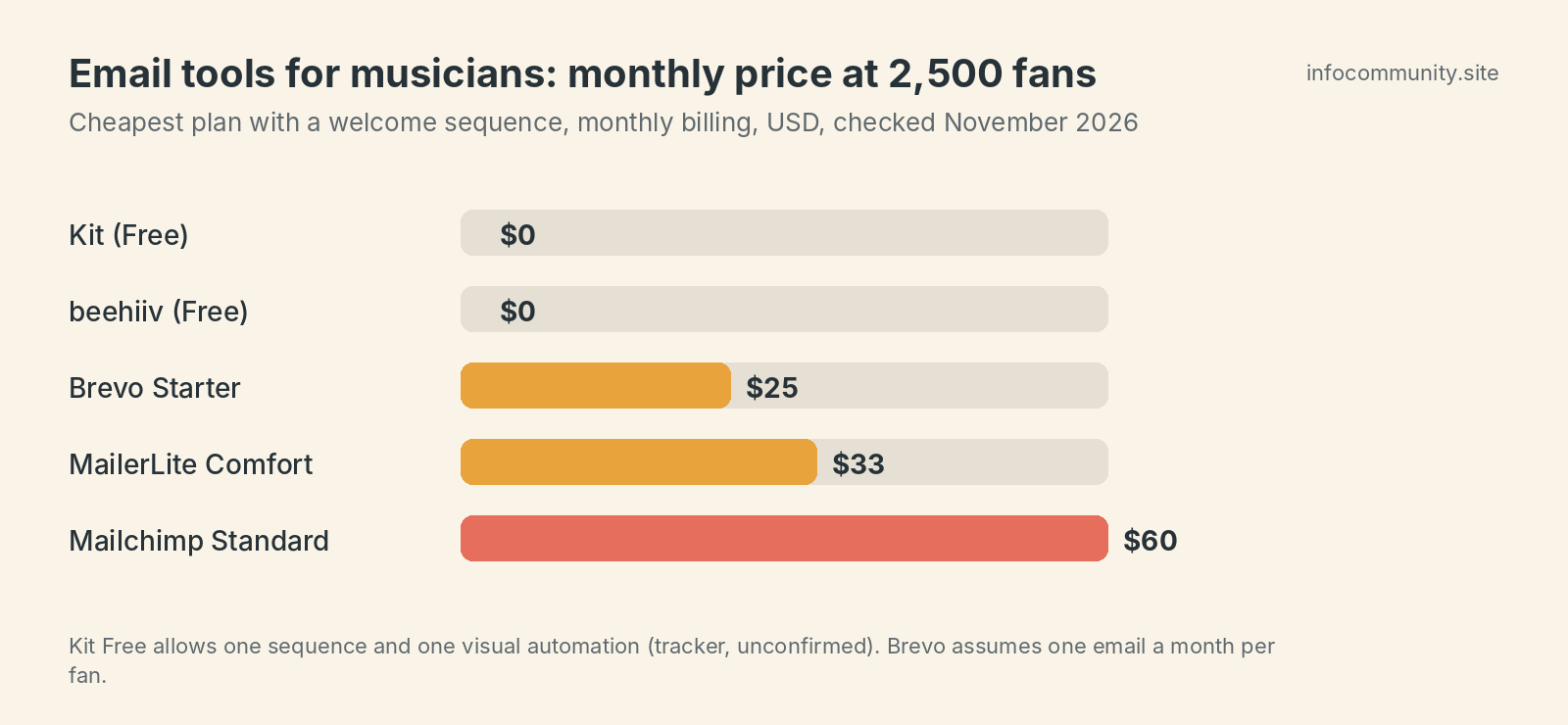
Best email marketing for musicians: price at 500, 2,500 and 5,000 fans
| Tool (plan used) | 500 fans | 2,500 fans | 5,000 fans |
|---|---|---|---|
| Kit (Free; Creator for more automation) | Free | Free | Free, or $89† on Creator |
| beehiiv (Free, then Lite) | Free | Free (up to 2,500) | $109 (Lite) |
| Brevo (Starter, by emails sent) | $9 | $25 | $32 |
| MailerLite (Comfort) | $12 | $33 | $49 |
| Mailchimp (Standard) | $20 | $60 | $100 |
How we calculated: monthly billing, US dollars, the cheapest plan that runs one automated welcome sequence. MailerLite, Brevo and Mailchimp prices were read on their own pricing pages on November 6, 2026; Kit’s Creator price of $39 at 1,000 subscribers was read inside our Kit account the same day, and its 5,000-subscriber price comes from a tracker (†); beehiiv prices are from its plan page. Brevo assumes one email a month to every fan plus a welcome sequence; its Starter tiers also cap stored contacts (2,500 contacts need the 15,000-email tier, $25; 5,000 contacts need the 20,000-email tier, $32). Kit’s free plan covers up to 10,000 fans.
The 5 tools, one by one
1. Kit: best free start for working musicians
Kit was built for creators, and musicians fit that model well. The free plan covers up to 10,000 subscribers, which is years of growth at $0 for most independent artists. Tags work naturally for music: tag fans by city, by what they downloaded and by where they signed up.
Kit can also sell digital products (an EP, stems, a sample pack or a lesson) with a fee of about 3.5% + $0.30 per sale, which is simpler than running a separate store for small releases.
What we checked (November 6, 2026): a new Kit account started a 14-day Creator trial without a card, and its billing page showed Creator at $39/month (or $390/year) for up to 1,000 subscribers.
The catch: the free plan has no sequences or automations (checked in our account on November 20, 2026). Any automated welcome or funnel means Creator: $39 at 1,000 subscribers, about $89 at 5,000†. Kit’s templates are plain, so your emails will look simple unless you design around that.
2. beehiiv: best if your newsletter is a brand
beehiiv is built for newsletters people read for their own sake: a writing-first editor, a web archive, referral and recommendation tools, an ad network for sponsors, and paid subscriptions with a 0% platform fee (Stripe fees apply). For an artist building a scene newsletter, with gear talk, interviews and behind-the-scenes posts, it is the strongest growth stack here.
The catch: for plain gig announcements and merch drops, it is more tool than you need, and its October 2026 plan changes moved some features to higher tiers†. We could not test beehiiv because it is not available in our region; the prices above are from beehiiv’s plan page.
3. MailerLite: best budget automation
The cleanest editor we have tested. Comfort starts at $12/month at 500 fans and includes 50 automations, landing pages, forms and up to five digital products, so a welcome sequence, city segments and an EP download page all fit on the cheapest paid plan.
What we checked (November 5 and 6, 2026): the free plan showed 250 subscribers and 2,500 emails a month; we built a three-step welcome workflow in about six minutes; and a test email reached our Gmail inbox with SPF, DKIM and DMARC all passing.
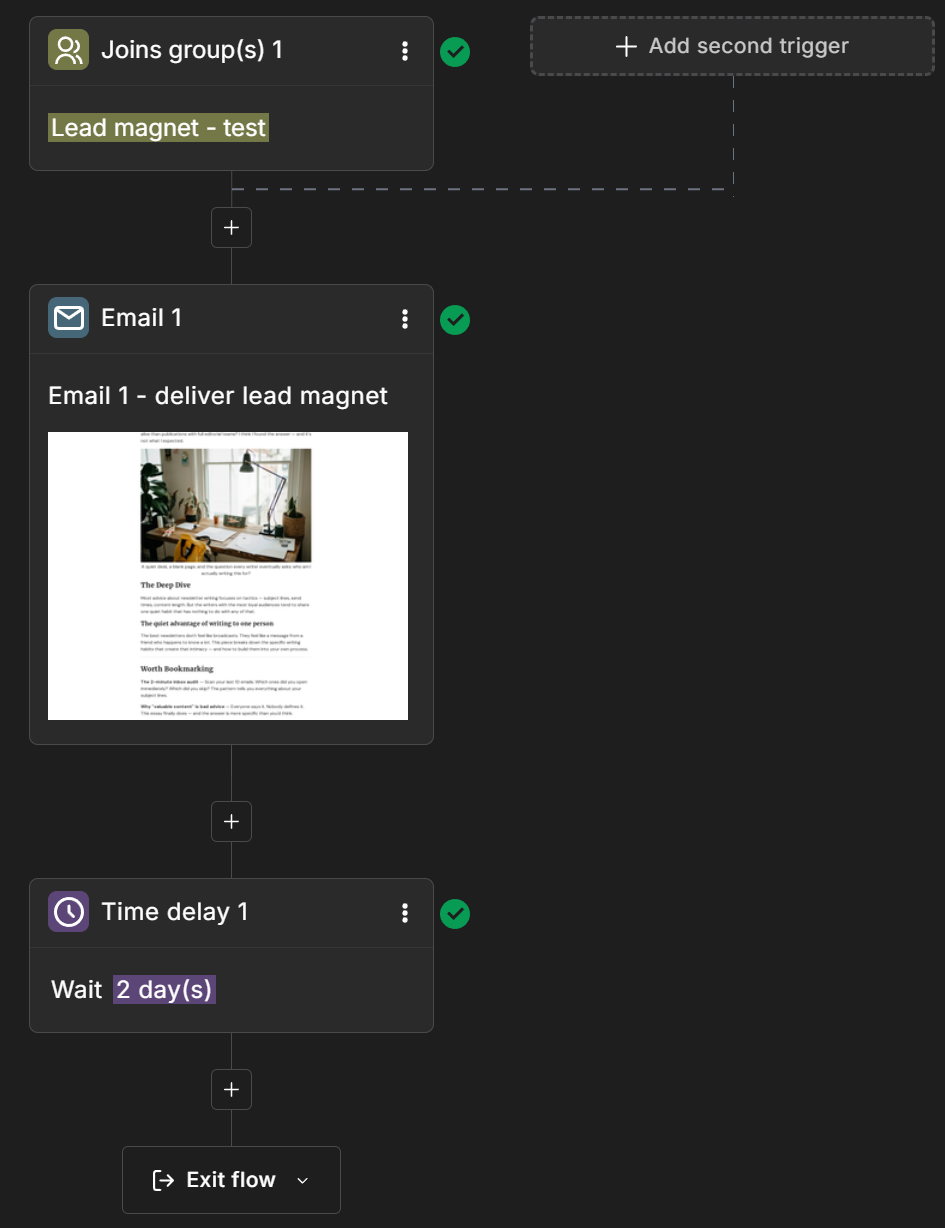
The catch: the free plan is small (250 fans), and MailerLite reviews new accounts before they can send campaigns†, so sign up a few days before release week, not during it.
4. Brevo: best for a big list you rarely email
Brevo charges for emails sent rather than contacts stored. If you have collected thousands of fans at shows over the years and only email them when there is a tour or a release, this can be the cheapest structure: $25/month for 2,500 fans and $32 for 5,000, with a monthly email and a welcome sequence. The free plan stores up to 100,000 contacts but only sends 300 emails a day.
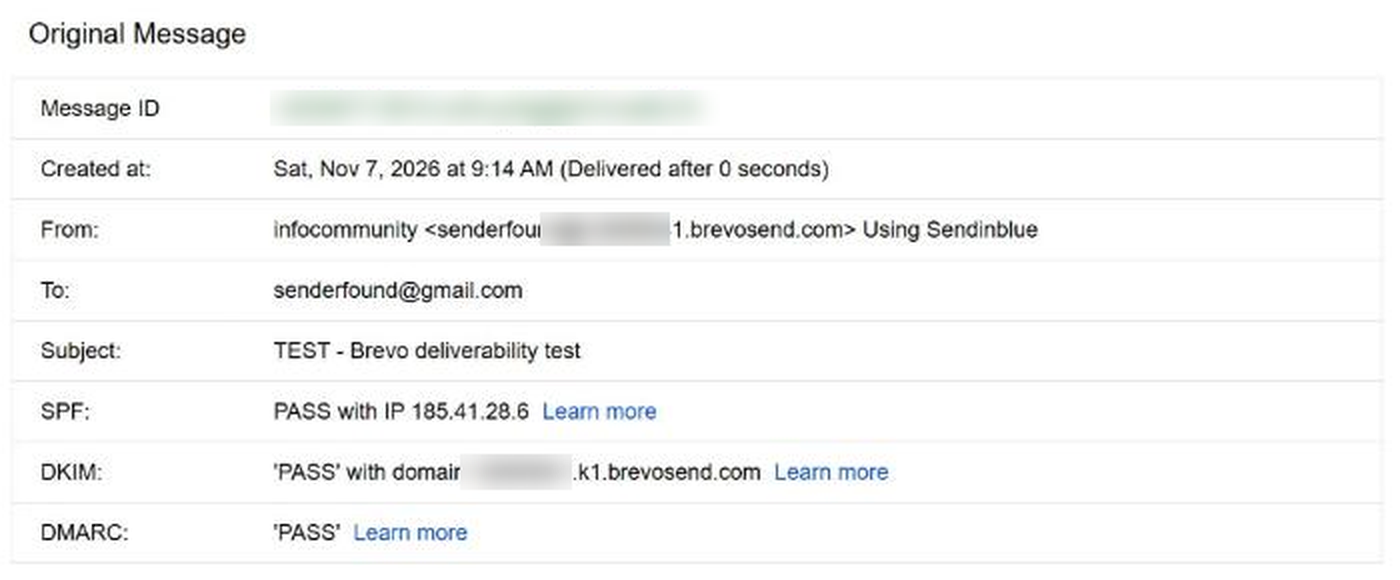
What we checked (November 6 and 7, 2026): after a phone validation, a test email reached the Gmail inbox with SPF, DKIM and DMARC passing. Our account showed automation capped at 2,000 contacts on Free and Starter.
The catch: that 2,000-contact automation cap means a 5,000-fan welcome flow needs Standard ($18 and up). The Brevo logo stays on Starter emails unless you pay $12/month to remove it.
5. Mailchimp: fine only if you are already there
Mailchimp has a large integration library and a friendly editor. If your merch store, booking tool or distributor only connects to Mailchimp, staying can make sense. Otherwise it is the most expensive option here: Standard is $20/month at 500 contacts and $100 at 5,000, and unsubscribed fans count toward your plan unless you archive them.
What we checked (November 6, 2026): the free plan showed 250 contacts and 500 sends a month, and an automation flow could not be switched on without upgrading.
Yearly cost at 2,500 fans
| Tool | Paid monthly, per year | Paid yearly (about) |
|---|---|---|
| Kit (Free) | $0 | $0 |
| beehiiv (Free) | $0 | $0 |
| Brevo Starter | $300 | $270 |
| MailerLite Comfort | $396 | $356 |
| Mailchimp Standard | $720 | Not priced |
Calculated from the monthly prices above; yearly figures apply each vendor’s stated annual discount (Brevo and MailerLite 10%). Kit and beehiiv stay free at 2,500 fans as long as their free-plan limits are enough for you.
For an independent artist, the difference between the best email marketing for musicians and the most expensive option here is about $700 a year at 2,500 fans: roughly the cost of a short run of vinyl test pressings or a few rehearsal-room months.
A launch-week plan for one release
Most of a musician’s email income arrives in a few days around a release. A simple plan you can reuse for every single, EP or tour:
- Two weeks before: announce the date and share the pre-save link. One email, one link.
- Release day: “It’s out” with the streaming link and, if you have one, the merch or Bandcamp link as a second, smaller button.
- Three days later: a behind-the-scenes story about one song, sent only to fans who did not click the release email.
- One week later: tour dates or a live video, segmented by city if you have shows coming.
Build it once as a template or automation in your tool, then copy it for the next release.
The fan-list setup that pays for itself
Whatever tool you pick, set this up in week one:
- Offer a download, not a newsletter. “Get the unreleased demo” gives people a reason to sign up.
- Tag every sign-up by source and city. City segments make gig announcements relevant.
- Write a three-email welcome sequence: the download, your story, then one ask (follow, pre-save or join the street team).
- Use one call to action per email. A pre-save link, a ticket link or a store link, not all three.
- Email before you need something. A list that only hears from you at sales time learns to ignore you. One real update a month keeps the channel warm for launch week.
Which is the best email marketing for musicians like you?
| Your situation | Our pick | Why |
|---|---|---|
| Starting out, $0 budget, one free download | Kit | Free up to 10,000 fans |
| Building a scene newsletter as a brand | beehiiv | Growth tools, sponsors, 0% fee on paid subs |
| Automation and city segments at the lowest cost | MailerLite | $12/month, 50 automations on Comfort |
| Big old list, a few emails a year | Brevo | Pay per email sent |
| A tool you rely on only integrates with Mailchimp | Mailchimp | Integrations are its strength |
The bottom line on the best email marketing for musicians
For most independent artists, the best email marketing for musicians is Kit’s free plan until you need a second automation, then MailerLite or Kit Creator depending on whether you value price or creator tools more. Brevo fits a big, quiet list, beehiiv a newsletter-first brand, and Mailchimp only an existing setup.
FAQ
Do musicians really need email marketing?
If you plan to tour, crowdfund or sell anything directly, yes. Social reach depends on an algorithm; an email list reaches people who asked to hear from you.
What is the best free email tool for musicians?
Kit, for most: free up to 10,000 fans for broadcasts and forms; automations need Creator. beehiiv (up to 2,500 fans) suits a newsletter-first artist. Our best free email marketing tools guide compares every free plan.
Can I sell music directly through these tools?
Kit sells digital products for about 3.5% + $0.30 per sale, and MailerLite Comfort includes up to five digital products. For a full merch store, keep your existing store and use email to announce drops.
Did you test these tools?
Four of the five (MailerLite, Kit, Brevo and Mailchimp), in November 2026, with the dates above and on our About page. beehiiv is not available in our region.
Keep reading
- Best email marketing for authors (2026)
- Best email marketing for coaches (2026)
- MailerLite vs Kit: an honest 2026 comparison
- The 5 best Kit (ConvertKit) alternatives
Sources and method
- MailerLite, Brevo and Mailchimp prices: mailerlite.com/pricing, brevo.com/pricing and mailchimp.com/pricing, read 2026-11-06; free-plan limits and test emails checked in our own accounts on 2026-11-05 to 2026-11-07.
- Kit: Creator price read in our own account on 2026-11-06; free plan up to 10,000 subscribers from Kit’s help center; Creator at 5,000 and the free-plan automation limit from a third-party tracker (†).
- beehiiv: beehiiv.com/pricing, checked after the October 1, 2026 plan changes.
Method: monthly US prices at fixed list sizes, hands-on checks with dates, and a dagger (†) on anything we could not confirm on a vendor’s own page or in our own account.